
LAG BAOMER - לאג באומר

LAG BAOMER - לאג באומר
Lag BaOmer began at sundown on Monday, May 4, and ended at nightfall on Tuesday, May 5 2026.
It is a minor festive Jewish holiday occurring on the 33rd day of the Counting of the Omer (18th of Iyar). In Gamatria, (each letter of the Hebrew alphabet has a numerical value associated with it), the Hebrew word ‘lag’ adds up to 33 and therefore, it is always celebrated on the 33rd day of the Sefirat HaOmer – the Counting of the Omer which falls between Pesach and Shavuot.
Significance
In the week between Passover and Shavuot – i.e. during the counting of the omer - a plage raged amongst the disciples of the great sage and Torah commentator, Rabbi Akiva. The plague that raged killed 24 000 of his students. But, on the 33rd day of the Counting of the Omer, the dying ceased.
Furthermore, Lag BaOmer also commemorates the anniversary of the death (Yahrtzeit) of Rabbi Shimon bar Yochai, a renowned sage and mystic.
It is celebrated by lighting large bonfires symbolic of the spiritual light imparted by Torah and the teachings of the renowned Torah teachers.
Other traditions include playing and dancing to music around the bonfire, holding weddings and also, a Jewish boy has his first haircut on this day.
The mystics further teach that the number 32 spells Lev (Heart). They teach that the students died during the first 32 days because their "love" lacked respect for others. The 33rd day represents moving beyond just feeling love, to treating others with the dignity they deserve.
And so, this day is set aside to repair relationships and focus on unity, acknowledging that every person contains a deposit of the Ru’ach, the Holy Spirit, because they are created in the image and likeness of HaShem.
A boy’s first haircut - upsherin (Yiddish)
The first haircut of a Jewish boy, known as an upsherin (Yiddish) or chalakah (Sephardic), is a traditional ceremony held when a child turns three years old. This milestone marks the transition from babyhood to childhood, initiating his formal Jewish education, the wearing of tzitzit (fringes), and the cultivation of peyot (side-locks).
The age of three is seen as the start of a child's ability to learn Torah and perform mitzvot (commandments). The practice is often linked to the biblical concept of orlah, which prohibits eating fruit from a tree for its first three years.
Friends and family gather to watch the first cut, often with guests given the honor of cutting a small lock of hair. During the haircut, the hair in front of the ears (peyot)is left to grow, initiating the commandment of peyot. Many families, particularly in Orthodox communities, celebrate the event at home or at a holy site, such as the tomb of Rabbi Shimon Bar Yochai in Meron, Israel.
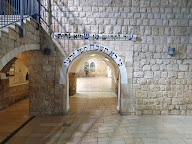
Meron is located in Northern Israel within the Upper Galilee region. It primarily refers to both Mount Meron, the highest peak in Israel (outside the Golan Heights), and the adjacent Moshav Meron, a religious village known for its significant holy sites.
It is situated approximately 5 kilometres (3 miles) west of the city of Safed (Zefat).
It is here at the Kever Rashbi – the (Tomb of Rabbi Shimon bar Yochai – that orthodox Israeli boys have the first haircut when they turn 3 years old. Apparently, tens of thousands gather in the mountains for this event.
Because of its mystical and Kabbalistic associations, my personal minhag or practice is not to observe this day. But, we need to be informed in order to determine for ourselves.
Comments